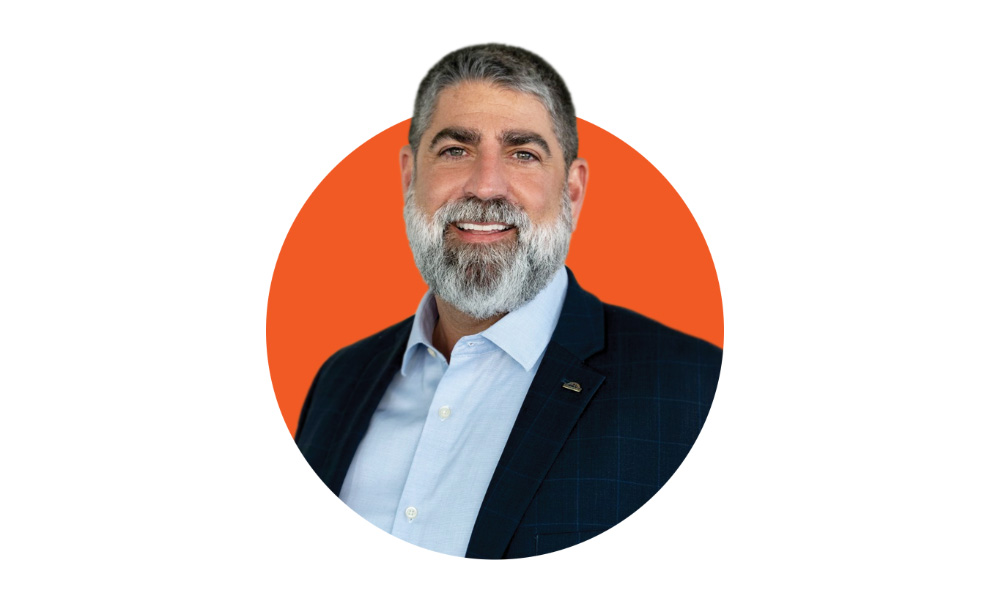


Zuper Interviews Josh Botbol, COO of GlobalMed
At Zuper, we know that a successful field service management system is invisible. When technicians arrive on site prepared, when equipment deploys according to schedule, and when systems run without downtime, nobody notices. Our software quietly takes the friction out of field service operations, but to the customer or client, this is viewed as just “business as usual”.
That expectation of quiet functionality and success is exactly what the most demanding healthcare technology deployments have to meet. When we discovered GlobalMed, we saw an organization that was solving the same operational-level hurdles as us, but in a completely different environment and with completely different stakes.
GlobalMed®️ is the infrastructure for distributed care, providing integrated hardware and software trusted by the White House Medical Unit, the U.S. Department of Veterans Affairs, Department of Defense, and healthcare organizations in over 60 countries. Their COO, Josh Botbol, recently sat down with us to discuss why field service operations are pivotal to what they do, as well as what actually goes into sustaining that infrastructure.
Q: As healthcare delivery becomes more distributed, where do you see field service management and virtual health technology converging?
Josh: They’ve already converged. GlobalMed is the infrastructure for distributed care. For that infrastructure to operate and succeed across hard-to-reach rural clinics, community health centers, disaster zones, and even combat scenarios, field service management has to be part of the story. Scheduling, dispatching, tracking, and maintenance all go into keeping our systems installed, serviced, and running across thousands of locations.
Q: With GlobalMed operating across over 60 countries, what does it take to sustain a virtual health platform across that kind of scope?
Josh: In our view, it’s by treating operations as seriously as the product itself. GlobalMed powers the world’s most advanced virtual health technology platform. That said, you can have the most advanced technology in the world, but that doesn’t matter if it’s not reliable in the field. Let’s say you have a telemedicine station at a rural VA clinic that suddenly goes offline. The Veteran waiting for specialty care doesn’t care how sophisticated the product supposedly is. They care about the distance and the time it took them to get to that clinic. They care about getting the medical services they need and deserve. What we do to make sure we deliver on those promises is maintain a service infrastructure that functions in remote and austere locations through proactive, preventive maintenance and by working with technicians who understand the impact their service has on patient care.
Q: Equipment failures in healthcare carry consequences that most field service environments never face. Does that fact inform GlobalMed’s operational model?
Josh: Absolutely, it’s why we don’t view operational discipline as separate from clinical quality. In the environments where our products are deployed, there’s zero tolerance for failure. A critical access hospital doesn’t have a backup plan if our system goes down and they can’t access diagnostic information, tools, scheduling, etc. That’s why we focus on preventive measures rather than responsive ones.
Q: For a deployment like GlobalMed’s, where does Zuper’s kind of operational visibility add the most value?
Josh: Preventive care and accountability. If we know that a medical kiosk in Wyoming needs maintenance, that means scheduling planned downtime for maintenance instead of letting it reach a point of failure. In addition to that, it’s important for us to know which technicians and teams service which unit and when, not just for the integrity of our own product but also for legal requirements. For healthcare and federal regulations compliance, we need a thorough documentation trail.
Q: GlobalMed serves the White House, DoD, and VA. What does field service compliance look like in those situations?
Josh: Compliance is never just about how the software is designed. Factors like encryption and data protection are always important, but components like role-based access, education, and ensuring that systems actually operate as their documentation claims are equally critical. These are parts of the security picture that you cannot overlook when you work in DoD and VA environments. We embed them into our service workflow from day one so that it’s a functional part of our operational efficiency.
GlobalMed powers the world’s most advanced virtual health technology platform, providing integrated telemedicine hardware and software trusted by the White House Medical Unit, the U.S. Department of Veterans Affairs, Department of Defense, and healthcare organizations in over 60 countries.